Web design aesthetics peaked in 2014

While doing research for one of my books, I looked at how the websites’ aesthetics have changed since 2012.
I looked at both B2C and B2B tech companies designers often use as references: Airbnb, Stripe, Basecamp, Intercom, Squarespace, Shopify, etc.
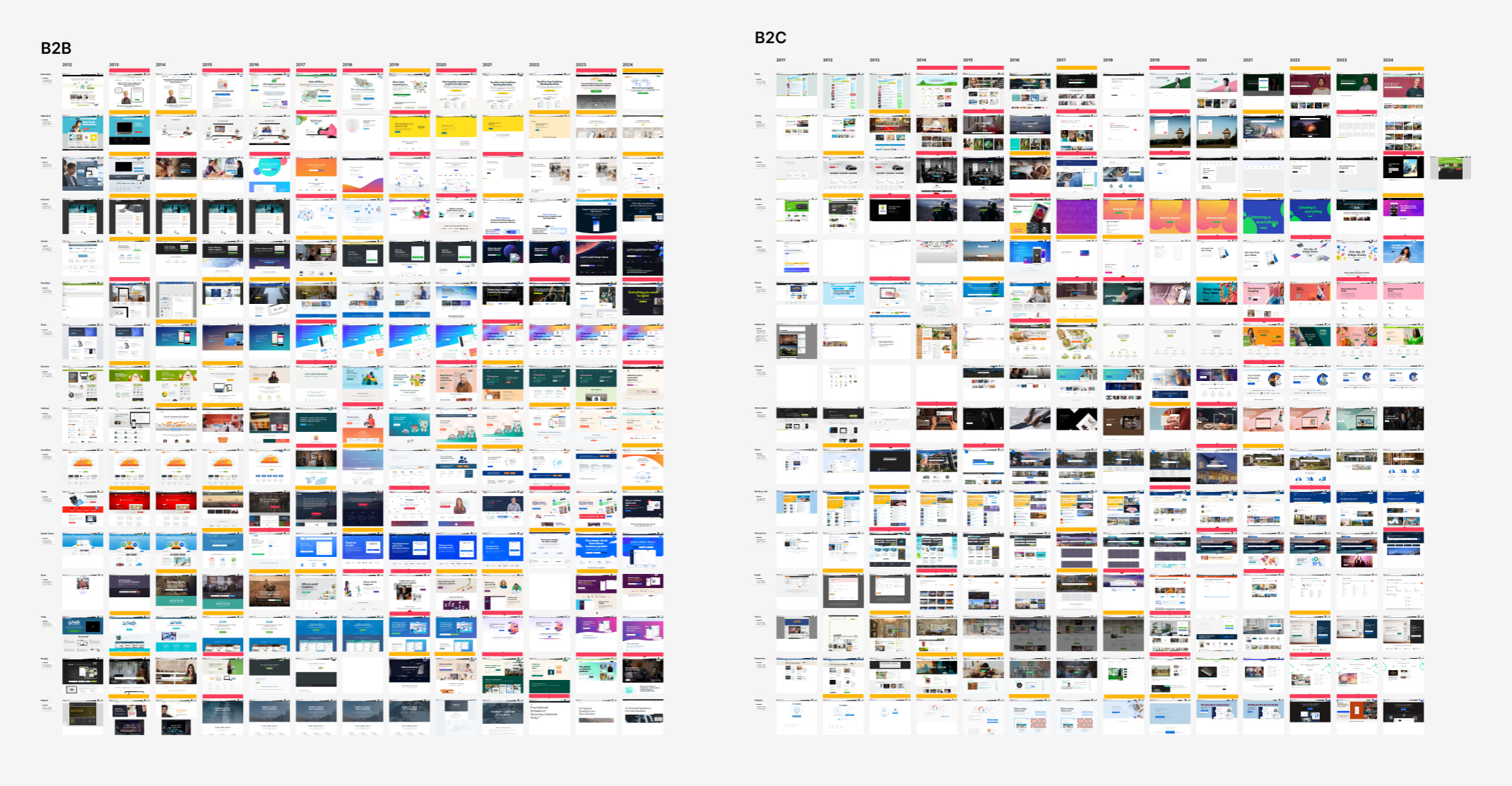
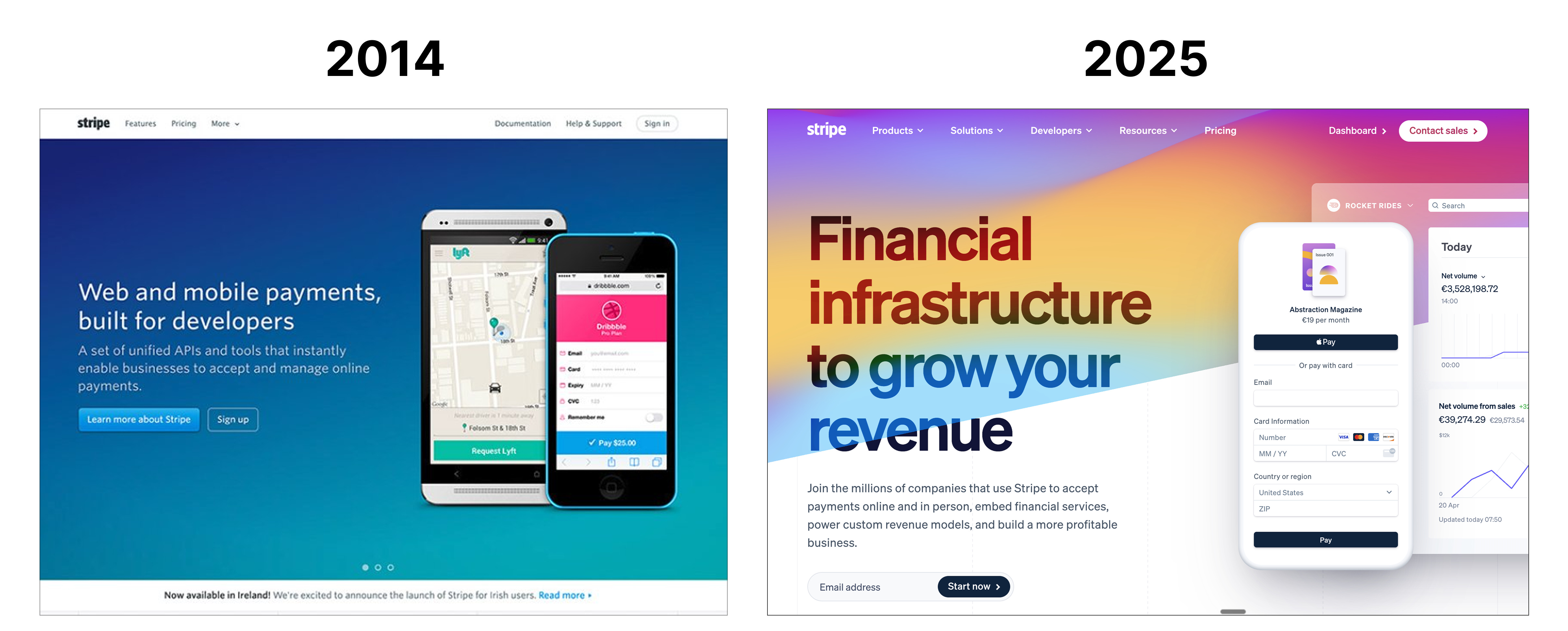
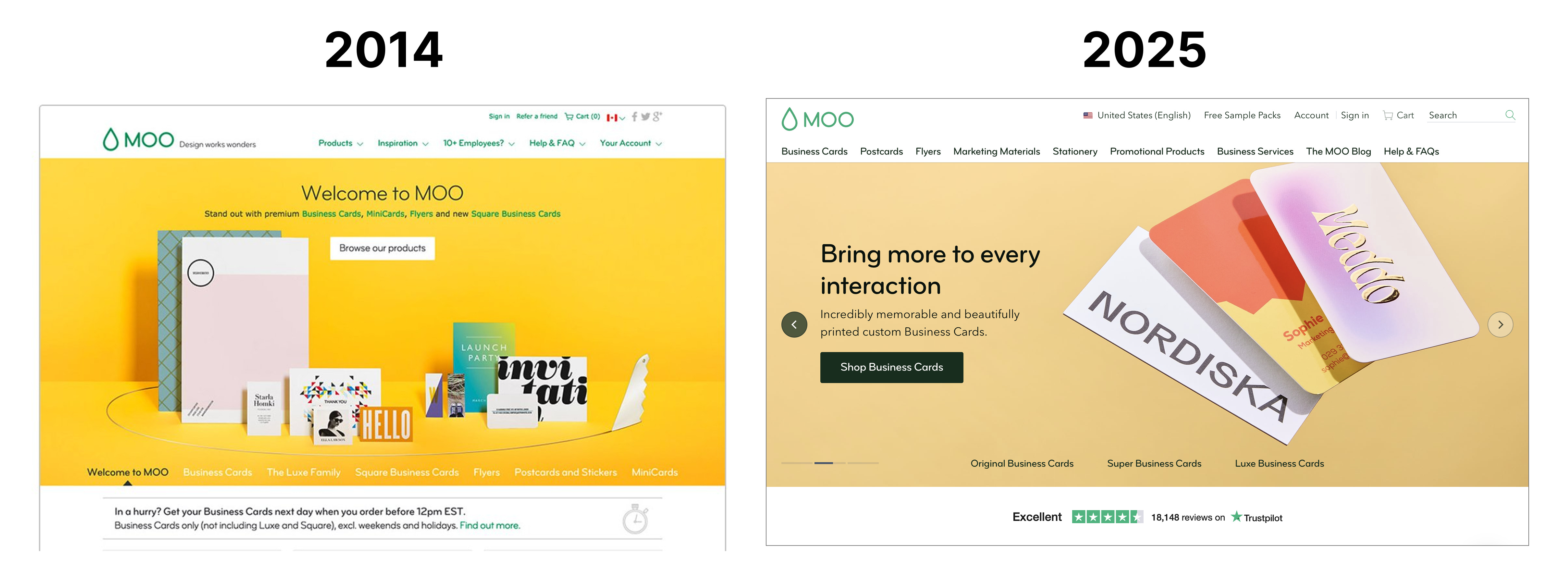
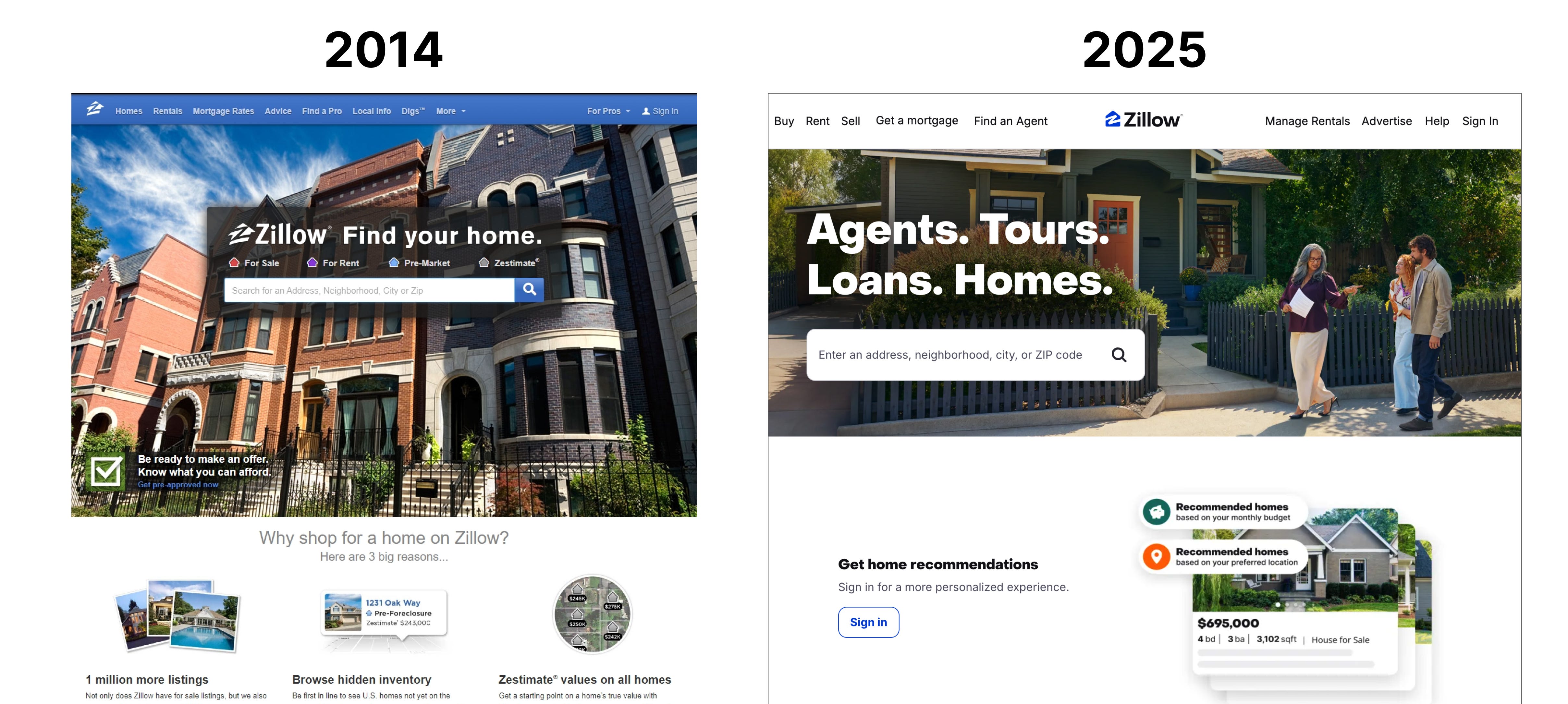
One thing I noticed is that web design aesthetics peaked (or plateaued) in 2014-2015.
The websites below, designed 10 years ago, would probably work and convert well even today:
Every December, we see a Medium post about the «5 Web Design Trends for 20XX».
All of them have repeated for the last 10 years: big typography, expressive colors, gradients, immersive experience, minimalism, etc.
And we, as designers, love that stuff. Because it adds some excitement and freshness to our work and maybe even helps us feel important. In a way, these trends help us stay busy and have jobs.
But eventually, we always go back to the foundations.
The same designers following trends often praise Dieter Rams, but ignore one of his ten principles:
“Good design is long-lasting. It avoids being fashionable and therefore never appears antiquated. Unlike fashionable design, it lasts many years — even in today’s throwaway society.”
By following a trend, we intentionally set an expiration date for our work and are more likely to waste org’s resources + be embarrassed by our portfolio in 2 years.
Some of the aesthetic design trends I see remind me of fast fashion. It makes products feel fresh for a second and irrelevant shortly afterward. By contrast, getting a more timeless piece — even when it’s more expensive — would save you time spent shopping, create less waste, and save you money in the long term.
In fast fashion, the goal of creating short-term trends is to maximize profits by creating more demand among customers. It almost feels like, in our industry, the aesthetic trends’ customers are often the designers themsevles and not the customers or businesses.
I’m forcing myself to avoid design trends, and it has helped my work to hold up even after 5-10 years.
I wrote about creating timeless design in my last book, The Path to Staff Product Designer.
Thanks so much for sharing this Artiom! I haven’t been paying attention to websites much since I don’t have one anymore, but I’ve always felt like the design remained pretty standard in that era you talked about and today. Very interesting. Do you think this has to do with a need for less websites which means less innovation?